
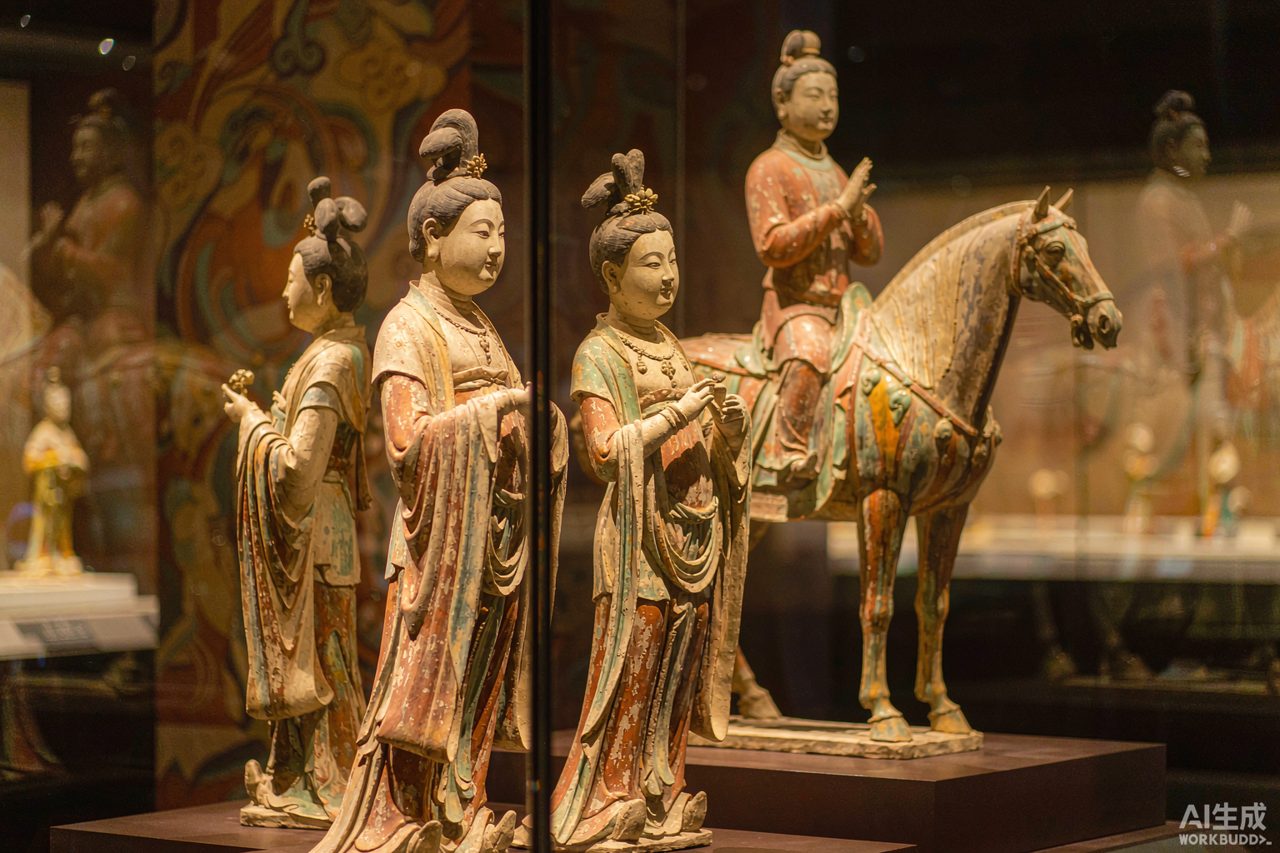
The Tang dynasty (618-907) is the era Chinese culture quotes when it wants to sound confident. Its capital Chang'an - today's Xi'an - was then the largest city on earth: a million residents, walled districts, and foreign quarters where Persian traders, Japanese students, and Central Asian musicians lived under imperial sponsorship.
Why it mattered
Tang China was open in a way no later dynasty matched. The Silk Road poured goods and ideas through the capital; Buddhism flourished at state expense; a Persian could sit the civil exams, and a Japanese monk could study for a decade and take the tradition home. Women rode horses and played polo; poetry was social currency - being able to cap a couplet at a dinner was career-relevant.
The dynasty's vehicle was the examination system, matured here: government office earned by composition rather than birth. The idea that talent should outrank pedigree became one of China's most exportable inventions - and its most durable.
Where you meet it
Little Tang architecture survives, but the experience does: the Terracotta Army day sits inside a city that still arranges itself around Tang street grids, and the Tang-themed shows and districts there are modern tributes to the era Xi'an keeps alive. Tang figurines - the plump court ladies and horsemen in every museum - carry the era's relaxed confidence better than any chronicle.
What it left behind
The poetic canon (every Chinese schoolchild recites Tang poems), the template of cultural openness as national strength, and a memory so strong that Chinatowns worldwide still call themselves "the Street of the Tang People" - Tangrenjie.
Adapted and translated from the Baidu Baike entry 中国文化 (archived source).
Comments (0)
No comments yet — be the first.