
How it formed
China's festival foods grew from two ancient systems braided together: the agricultural calendar (lunar feasts marking seasons) and the offering tradition (food presented to ancestors, then shared by the family). Over centuries each festival locked to a signature food, each food wrapped in a founding story, until the pairing became obligatory - a date without its dish is barely the date.
The pairings you'll meet
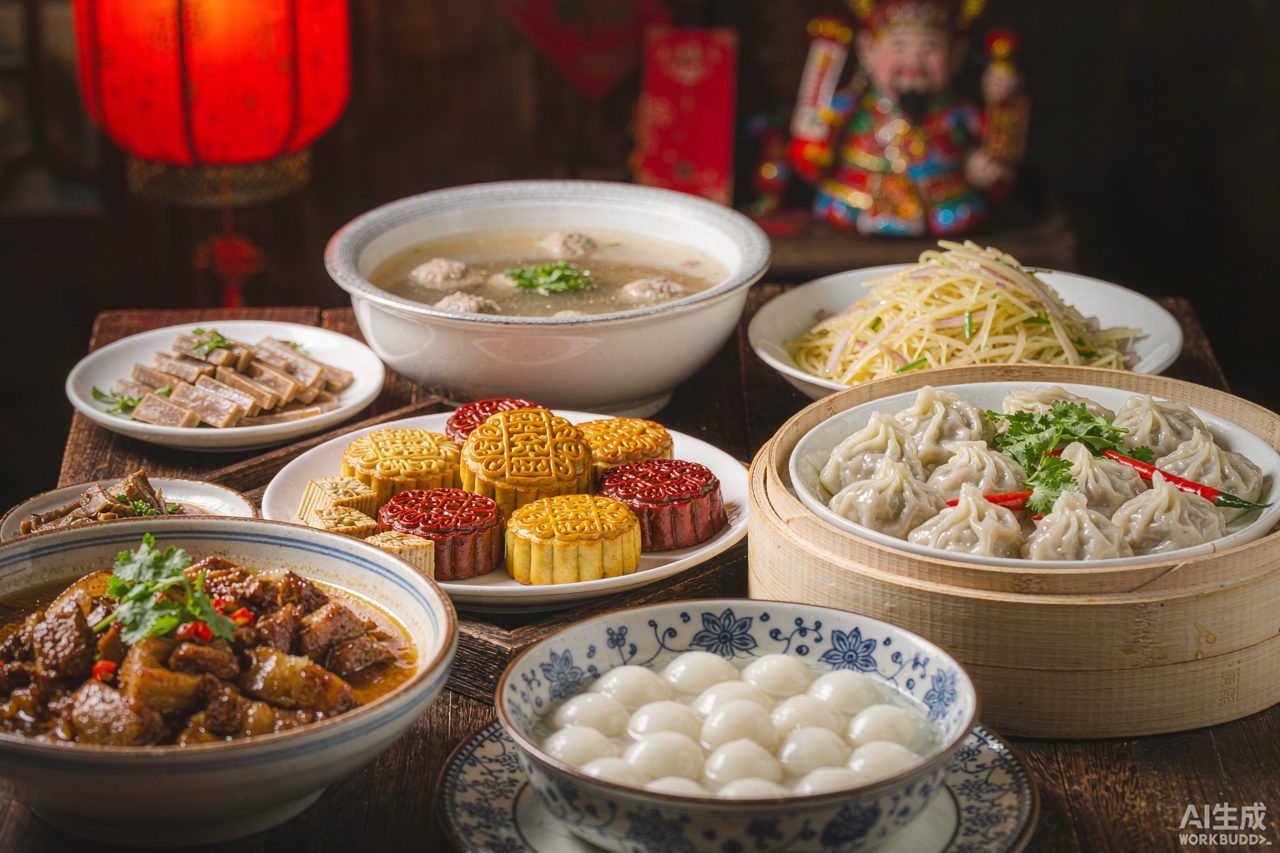
Spring Festival (Lunar New Year) belongs to the dumpling (jiaozi), shaped like an old silver ingot - eating them at midnight is folding wealth and family reunion into one bite. The mid-autumn mooncake seals the harvest moon with roundness = completeness; boxes travel across the country as obligations between families and firms. The Dragon Boat Festival's sticky-rice zongzi honors the poet Qu Yuan; Lantern Festival's sweet rice balls (tangyuan) rhyme "round" with "reunion." Regional variants are endless - the south eats niangao (year-cake, "rising year by year") where the north eats dumplings.
Where it began
All of them begin at the family table, not the restaurant - these are home-cooking obligations, which is why bakeries sell mooncakes by the crate and train stations smell of them in September. If your trip overlaps a festival, join a table: the food is the entrance ticket, and refusing seconds is the only rude move.
What it means
Each pairing binds food to obligation: eating it on the right day asserts family continuity - the dead, the living, and the next generation sharing one table on schedule. That is the deeper calendar: not dates but duties, deliciously enforced.
Adapted and translated from the Baidu Baike entry 中国文化 (archived source).
Comments (0)
No comments yet — be the first.