
How it formed
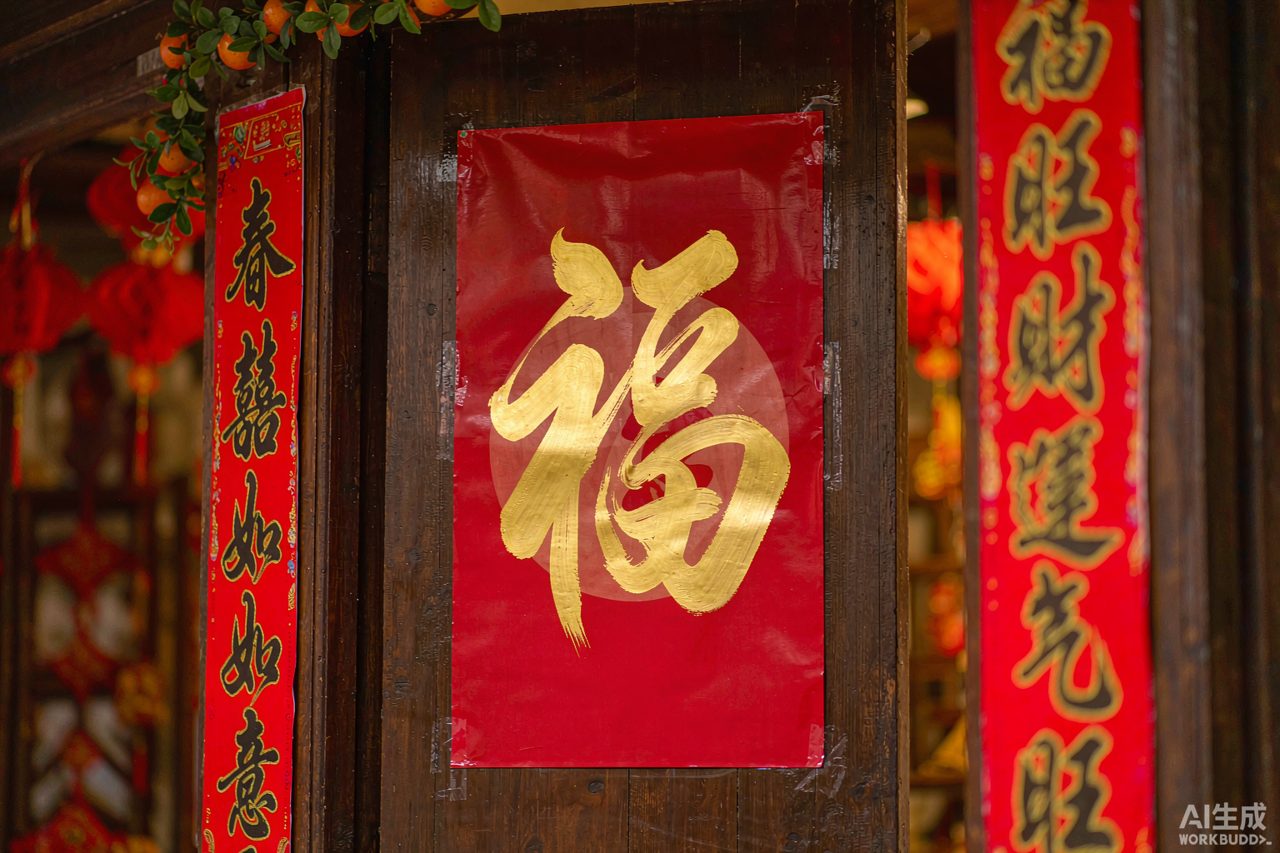
The character fu means fortune or blessing, and pasting it on doorways at Spring Festival is the season's most universal custom. The famous twist - pasting it upside down - is pure wordplay engineering: in Chinese, "fu upside-down" (fu dao) sounds exactly like "fortune arrives" (fu dao le). Homophones are taken seriously as luck: numbers, dishes, and gestures all get recruited by sound.
The custom's origin story is Ming-dynasty: an emperor's decree marked loyal households' doors with fu, one household illiterately pasted theirs inverted - and the empress saved the family by explaining the mistake as the pun. The emperor rewarded them; households everywhere copied the "mistake."
Where it began
Doorway blessing papers trace to Song-era peachwood charms and became the red paper custom by the Ming, when cheap paper and printing made it a national habit. You will see it on every door - hutong gates in Beijing, village doorways, city apartments, shop grilles - each Spring Festival, freshness of the paper marking the household's care.
What it means
Two layers. First, language as magic: to say a lucky thing is to begin causing it, which is why the whole festival season runs on taboo words and auspicious homophones (fish, yu, "sounds like" surplus; a whole fish served with head and tail means "complete"). Second, the inverted fu marks the door as a threshold between the year's luck outside and the family inside - inviting fortune in, deliberately, by the pun. When you photograph a doorway, you are photographing a sentence: "may fortune arrive at this house."
Adapted and translated from the Baidu Baike entry 中国文化 (archived source).
Comments (0)
No comments yet — be the first.