
How it formed
Lions are not native to China - they arrived as tribute gifts along the Silk Road, and the Han court saw its first specimens over two thousand years ago. Real lions were imperial rarities; the image, however, ran free. Buddhism adopted the lion as the Buddha's guardian and throne animal, and by the Tang the stone lion was fixed as the guardian of gates - temples, palaces, government offices, wealthy homes, bridges.
Because almost no carver had seen a living lion, the stone version became a creature of pure convention: curly mane, bulging eyes, a stylized power that drifted further from nature with every century - which is why they look so un-lion-like and so unmistakably Chinese.
Where it began
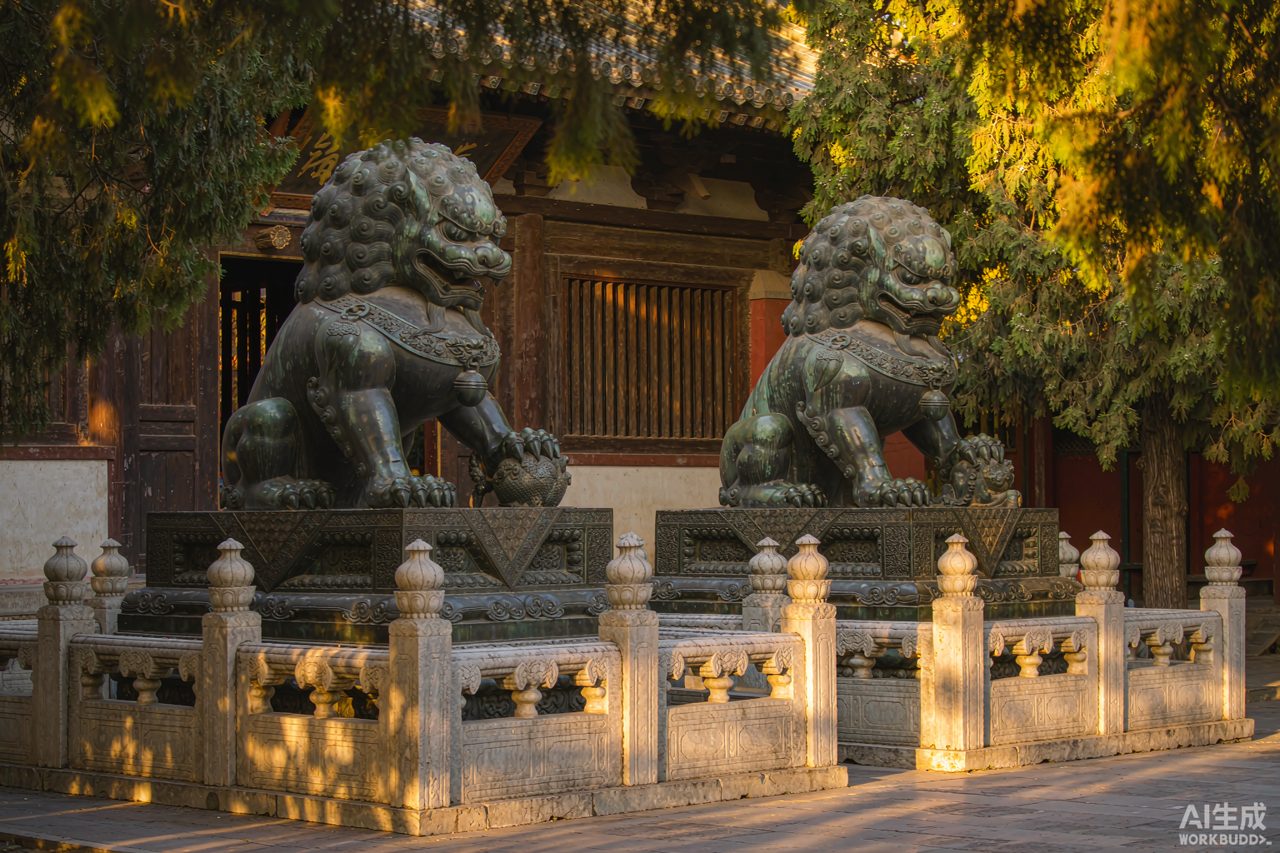
The pairing custom matured in the Ming and Qing, when the rules hardened: always a male-female pair, male on the east (right as you face out) pawing an embroidered ball - the world under power - female on the west restraining a playful cub under her paw - family continuity. Rank showed in the details: claw count, mane curls, whether the gate merited stone at all.
What it means
The pair encodes the culture's two founding ideas in one statue: power protected and family continued. They also functioned as security theater with teeth - offices and banks still install fresh pairs at ribbon-cuttings. Read any doorway: if the lions are new, the institution wants you to read them. Check the cub's and ball's position next time you pass - you now know which side is which.
Adapted and translated from the Baidu Baike entry 中国文化 (archived source).
Comments (0)
No comments yet — be the first.