
How it formed
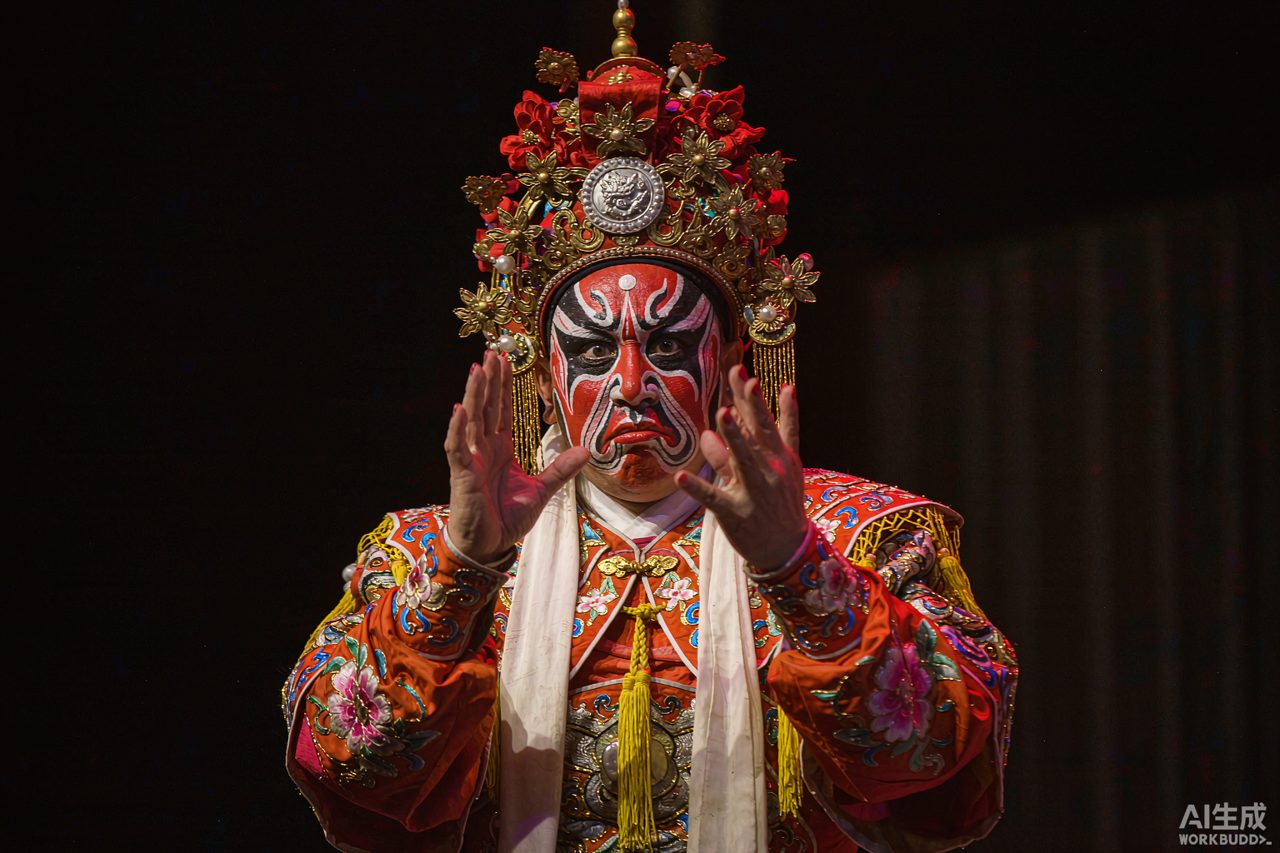
Chinese opera face paint (lianpu) matured with the opera tradition itself - court entertainment under the Ming and Qing fused regional music, dance, and stylized drama into the form performed today. As plots drew from shared historical novels and legends, audiences already knew each character; the painted face existed to typecast instantly, at a glance, from the back row.
The system hardened into grammar. Color carries moral identity: red for loyalty and courage (General Guan Yu's signature), black for blunt integrity (Judge Bao's face), white for treachery and suspicion - the villain's shade, always. Patterns and eyebrow shapes further rank the character: generals, gods, outlaws, and clowns each have their geometry.
Where it began
Opera itself has many regional roots - Kunqu in the south, Sichuan opera with its face-changing trick, and the synthesis we call Beijing opera, which crystallized in the capital in the late 18th century when four major troupes from Anhui merged traditions there for the emperor's birthday celebrations.
What it means
The painted face expresses a culture where moral type is legible on the surface - the outside should declare the inside. It also carries the aesthetic of suggestion over realism: three actors and a prop are an army; a painted pattern is a personality. When the curtain rises, you are not watching a mystery unfold - you are watching known characters tested, which is why regulars close their eyes to listen.
Adapted and translated from the Baidu Baike entry 中国文化 (archived source).
Comments (0)
No comments yet — be the first.