
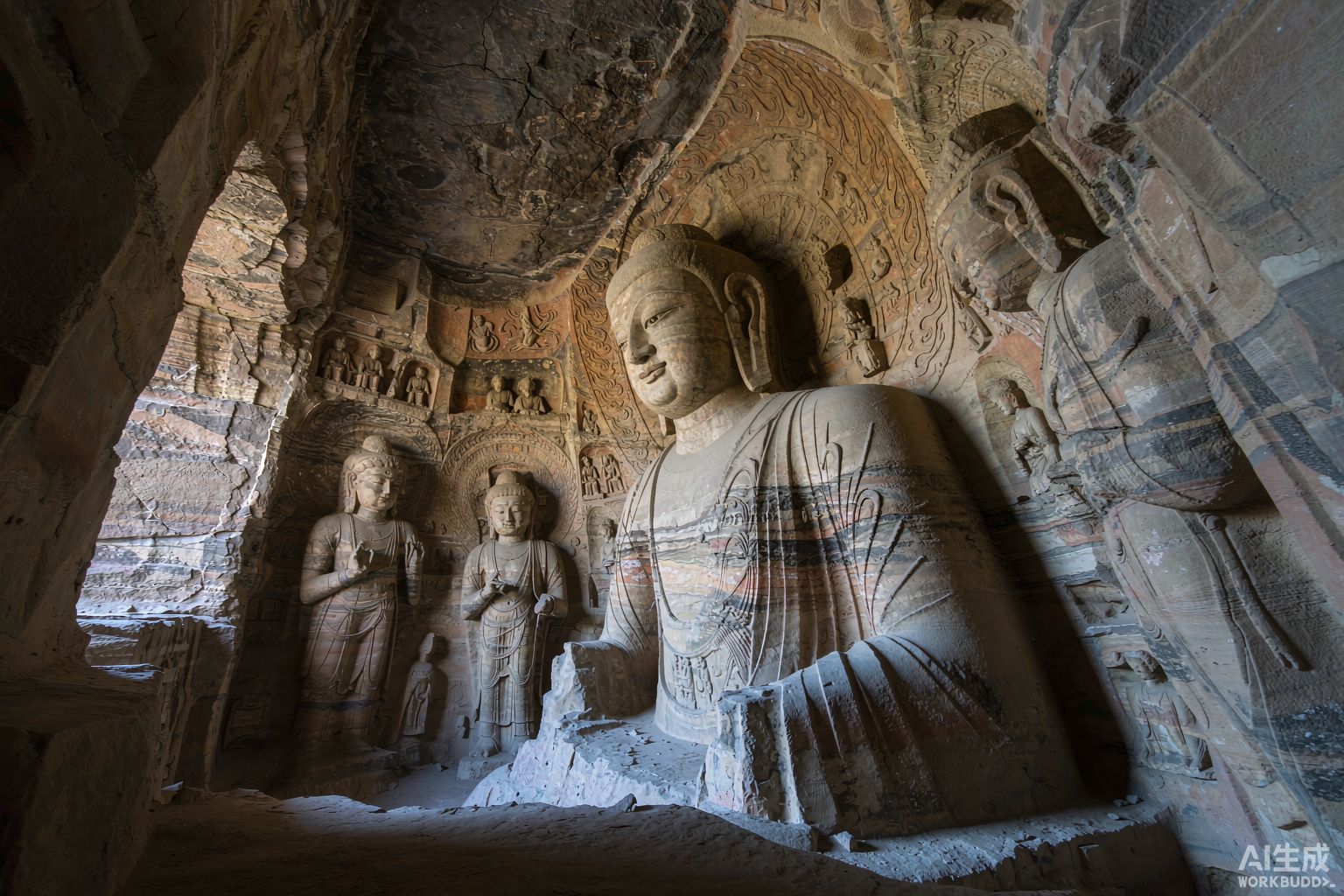
Buddhism entered China along the Silk Road in the first century CE, and the next six hundred years produced one of history's great cultural translations: an Indian religion of renunciation remade by Chinese family values, statecraft, and aesthetics into something neither culture could have produced alone.
How it took root
The early translation work was literal and enormous - teams of monk-translators spent centuries rendering Sanskrit concepts into Chinese, often coining words that borrowed Daoist vocabulary to explain ideas like emptiness and karma. Chinese households did not abandon ancestors for Buddha; they added him. The result is the distinctively Chinese pattern you still see: a temple where Confucian study, Daoist gods, and Buddhist worship share one mountain.
Politically, the religion rose and fell with dynasties - sponsored by Northern Wei emperors who carved Yungang's cave Buddhas, persecuted in the great suppression of 845, yet always returning, because it answered a question the state ideology did not: what happens after death.
Where you walk through it
The grottoes are the evidence, carved exactly when the translation was happening. Yungang near Datong (5th century) shows the Indian face still visible in the stone; Longmen near Luoyang shows it becoming Chinese; the giant Buddha at Leshan, on any Chengdu side trip, shows the scale the religion reached.
What it left in daily life
Vegetarian monastery cuisine, the pagoda silhouette on every skyline, the vocabulary of fate and karma in ordinary conversation, and the temple fair - part worship, part market day - that still anchors festival calendars. You do not need to be religious to read it: it is the second voice in every conversation Chinese culture has with itself.
Adapted and translated from the Baidu Baike entry 中国文化 (archived source).
Comments (0)
No comments yet — be the first.