
How it formed
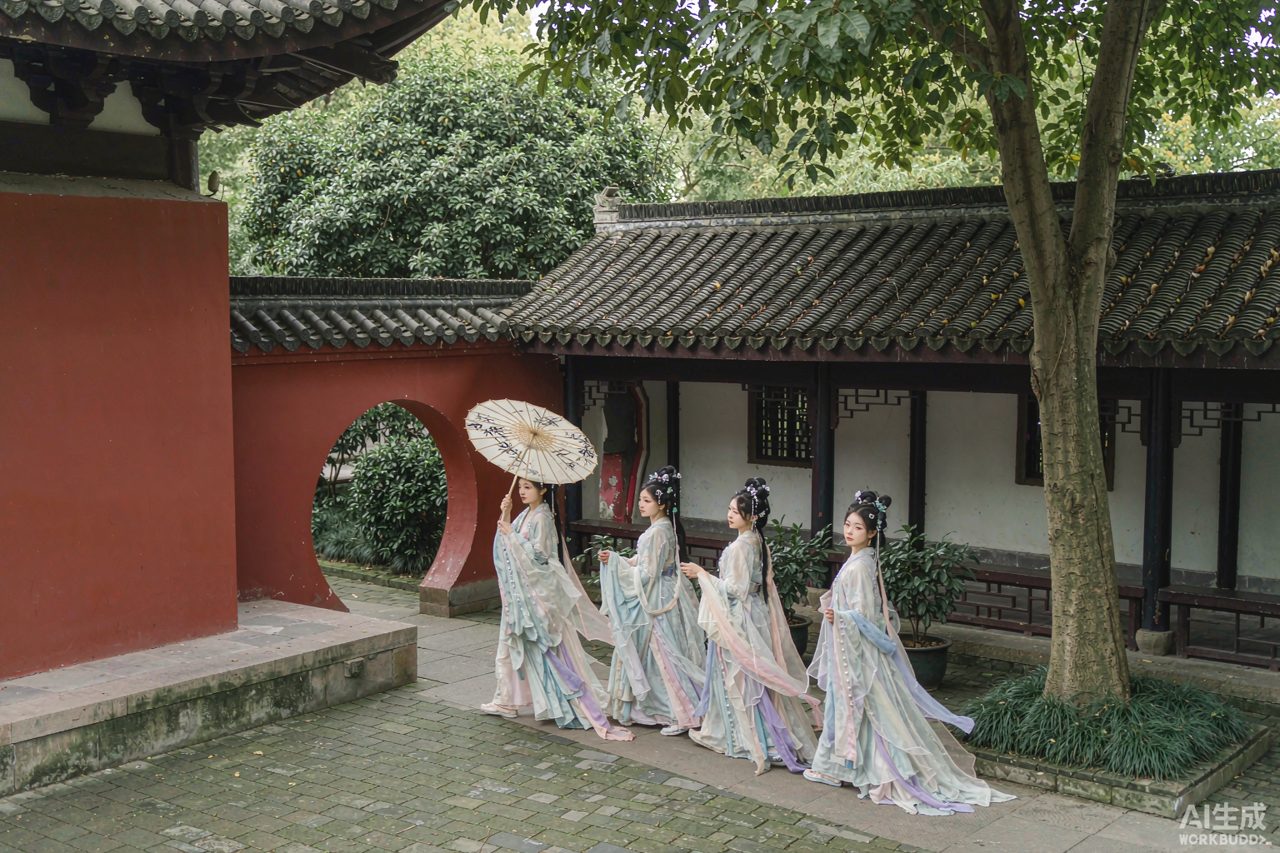
Hanfu - "Han clothing" - is the reconstructed dress of the pre-Qing Han majority: crossed collars, wide sleeves, sashed robes layered by rank and season across three thousand years of evolution. The Qing dynasty's mandatory queue-and-jacket edict broke the lineage; the 20th century dressed China in Western and modern clothes; and the robes survived as stage costume - opera, ceremony, film.
The revival
What you see at scenic spots today is a grassroots movement born in the early 2000s: hobbyists researching tomb figurines, paintings, and texts to reconstruct accurate garments, worn publicly as a claim - that this heritage is live, not archived. Social media scaled it into a genuine youth economy: rental studios now operate at every major old town, graduation photos are taken in hanfu, and the looks range from museum-accurate to fantasy-adjacent. It parallels the broader cultural confidence wave - and international fans now drive much of its visibility.
Where it began
The movement's home base is online and urban - Hangzhou, Chengdu, and Xi'an host the largest hanfu communities and the most photographed backdrops. Changsha and Luoyang's Tang-themed districts rent by the hour with hair and makeup included.
What it means
Wearing hanfu is rarely reenactment; it is identity. The wearer is saying tradition is a choice you can actively make - beauty with a lineage, worn on a Tuesday. photographing someone in hanfu is welcome almost everywhere; asking first is the one rule.
Adapted and translated from the Baidu Baike entry 中国文化 (archived source).
Comments (0)
No comments yet — be the first.