
How it formed
Chinese martial arts (wushu, popularly kung fu) grew from two intertwined roots: military technique and self-cultivation. Fighting methods were systematized over centuries of warfare; monasteries - Shaolin most famously - layered on philosophy, fusing combat with Buddhist and Daoist practice. By the Ming and Qing, styles had branched into hundreds of schools, roughly split between "external" styles building power and speed (northern Shaolin) and "internal" styles cultivating energy and softness (taijiquan, bagua).
The modern form is a 20th-century standardization: performance wushu for competition and film, traditional lineages continuing in schools and parks.
Where it began
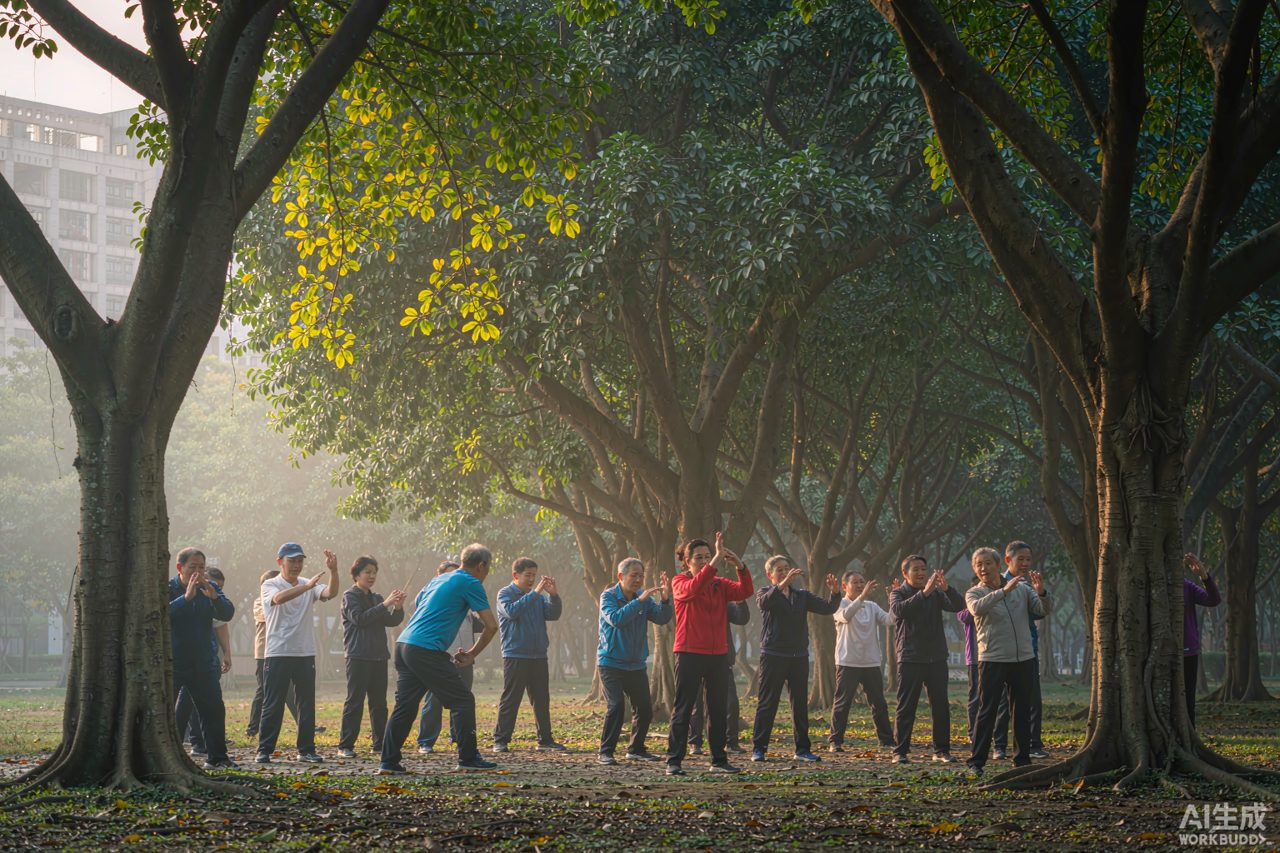
Shaolin Temple on Mount Song in Henan is the legendary center - its warrior-monk stories are half history, half myth, and its shows are a staple of the Xi'an orbit. But the everyday version is not at the temple: it is the dawn crowd in any city park, moving slowly through taiji with swords and fans.
What it means
The deepest idea is that fighting skill is an ethical practice - discipline of the body disciplines the person, and mastery shows as restraint. That is why "kung fu" literally means skill earned through time and effort, applicable to cooking or calligraphy too. The slow park taiji you photograph is not performance; it is maintenance of body and mind, medicine and meditation at once. Watching it, you are seeing the family-and-self-cultivation ethic exercised in real time.
Adapted and translated from the Baidu Baike entry 中国文化 (archived source).
Comments (0)
No comments yet — be the first.