
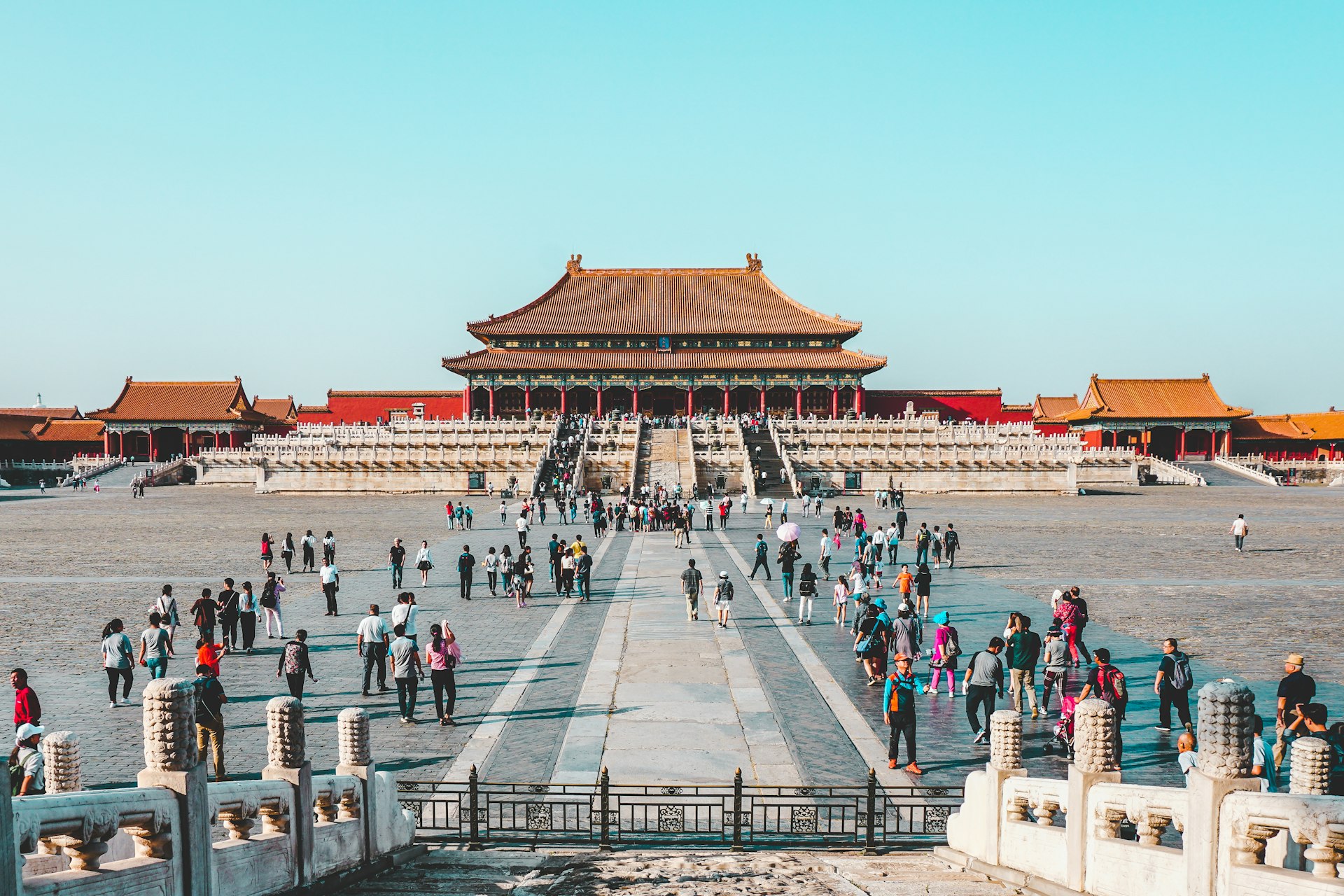
The Ming (1368-1644) and Qing (1644-1912) are the "orthodox centuries": the period that hardens the canon - ritual, family hierarchy, the exam canon - and builds almost everything you photograph in Beijing. The Forbidden City, the Temple of Heaven, the Mutianyu sections of the Great Wall: all Ming-Qing statement architecture, built to make order visible.
The system
Confucianism became state orthodoxy in earnest: the examination canon was fixed, commentary standardized, and the scholar-official became the empire's operating class. Society organized by the family model - seniority, obligation, and the ancestral hall as local government. The courtyard house is this ethics in brick: generations ranked by orientation and proximity to the central court.
The era was also inward-looking by design - sea voyages banned after the great Ming expeditions, trade channeled through single ports, foreign contact managed at the tributary border. The Great Wall sections you walk are Ming engineering: the response to a northern frontier problem that outlasted every solution.
Where you meet it
Beijing is the era's showpiece: the Forbidden City's roof hierarchies (see curved roofs), the Temple of Heaven's ritual geometry, the hutong courtyards. Beyond the capital: Pingyao's merchant courtyards, the Ming villages of southern Anhui, and the Qing summer mountain resort at Chengde.
What it left behind
The template tourists expect - palace, wall, courtyard, opera - plus the tension of the modern era that followed: a civilization that spent six centuries perfecting order, then spent the next rebuilding on its own terms. Much of what feels "classic China" is a Ming-Qing staging of much older ideas.
Adapted and translated from the Baidu Baike entry 中国文化 (archived source).
Comments (0)
No comments yet — be the first.