
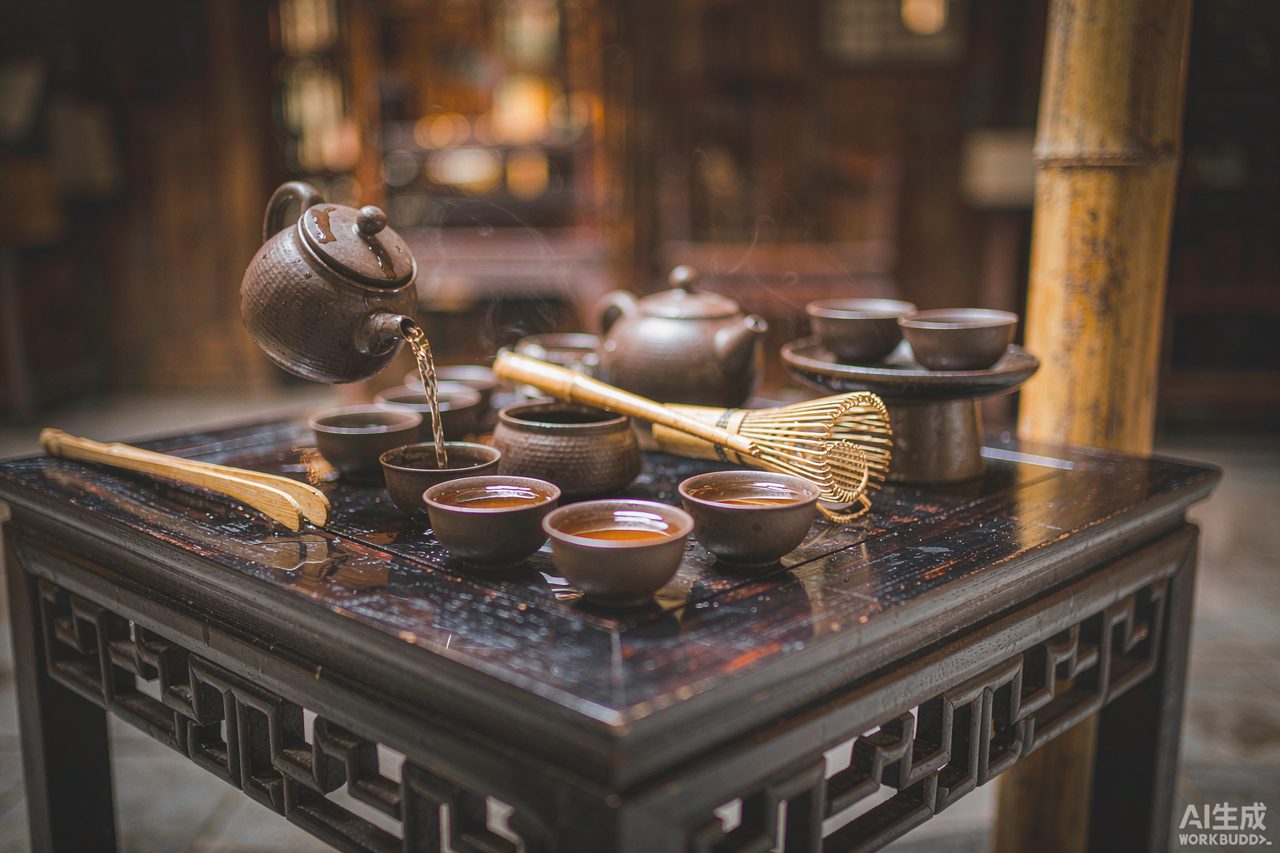
How it formed
Tea began as medicine, became a monastic and scholar habit, then turned into the empire's social fabric. By the Tang dynasty the first tea classic had codified it; the Song refined preparation into connoisseurship (see Song refinement); and the Ming switch from whisked powder to loose leaf created the steeping culture the world now drinks. Trade made it global - the word "tea" itself traveled from coastal Chinese dialects into every port language.
Where it began
The plant's story starts in the southwest - Yunnan's ancient tea trees - with cultivation spreading through Sichuan into the Yangtze valley. The great growing regions map onto the destinations you visit: Longjing village beside Hangzhou's West Lake, the oolong cliffs of Fujian's Wuyi Mountains, Pu'er from Yunnan, and the covered teahouses of Chengdu, where the tradition is loudest and most social.
What it means
In China, tea is protocol. Refilling your neighbor's cup before your own is the basic courtesy; the cup is never drained to the bottom (that asks for more); and a host refilling constantly is saying "stay." There is even a silent thank-you: fingers tapping the table, a gesture from a Qianlong-era legend of a disguised emperor whose companions dared not kneel. Business, matchmaking, apology, negotiation - all run over tea because the ritual lowers the temperature of everything said over it. If someone pours for you, the conversation has begun.
Adapted and translated from the Baidu Baike entry 中国文化 (archived source).
Comments (0)
No comments yet — be the first.